Planting Our Orchard

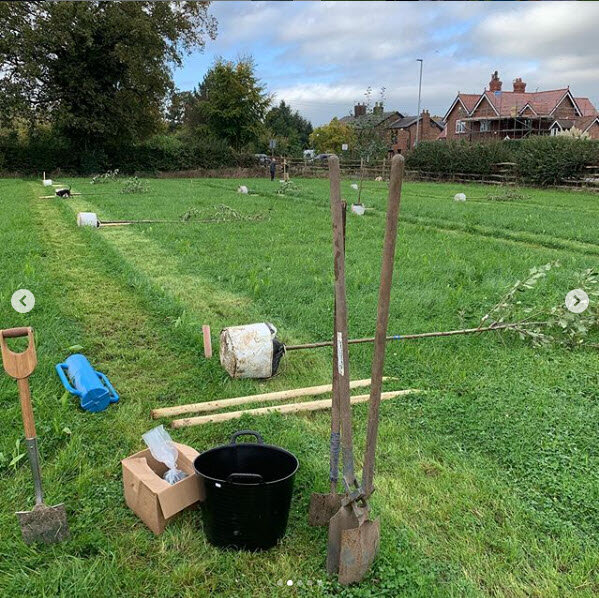
This past week we’ve been planting our new orchard. The trees we bought are about 10 years old and a mixture between Pear, Apple, Cherry and Plums. We picked these fruits, not only for our benefit, but also for the chickens. When the trees start to drop fruit, we’ll let the chickens roam around and collect the fallen fruits, while also fertilising the soil to help the trees.

We’ve recently also had 4 bee hives brought to our farm by a local man who loves the bee-keeping process. Having the bees around will be a bonus for our fruit trees next summer! We tried this year to grow Pumpkins, which relies on the pollination of the flowers to create the fruits. We were mildly successful with 9 fully grown pumpkins just in time for Halloween, but having the bees around for next year will be a massive bonus!


Pumpkin Season

Yes, it's Halloween! Having pumpkins around, as well as great for carving are also amazing nutrients for your chickens!

There’s loads of different ways you can feed pumpkins to you chickens, you can literally hang it up from the roof of the coop and let them all peck at it. You can slice it up to make it a bit easier for them or you could make them a ‘Poultry Pie’. Your flock will love it all regardless!

how to make poultry pie
pumpkins.jpg

Higher Oak Farms Naga Chilli Peppers

We have had our first crop of Naga Chillies at Higher Oak Farm this week! So far only one person has dared to eat one and boy was it hot!! :-D

The Naga Viper pepper is one of the hottest chili peppers ever measured. It was briefly the "World's Hottest Chilli" in 2011 according to the Guinness World Records with a rating of 1,382,118 Scoville Heat Units (SHU), a figure that surpassed the reading of the Infinity Chilli.  In 2012, it was surpassed by the Trinidad moruga scorpion and in 2013 the Carolina Reaper for hottest chili.

The Naga Viper was created in England by chilli farmer Gerald Fowler of The Chilli Pepper Company in CarkCumbria.  It is claimed to be an unstable three-way hybrid produced from the Naga Morich, the Bhut Jolokia and the Trinidad Scorpion (some of the world's hottest peppers). Due to its hybrid nature it is unable to produce offspring exactly like the parent due to segregation of alleles, and therefore traits.